Orange Blossom Distillation
The Ancestral Intelligence Archive
What is the Ancestral Intelligence Archive?A project exploring the indigenous practices that have functioned as climate resilient and regenerative systems for centuries capturing the economical layers and reframing them as structured knowledge sources for future adaptation
the circular ecology of ma'zhar (orange blossom)
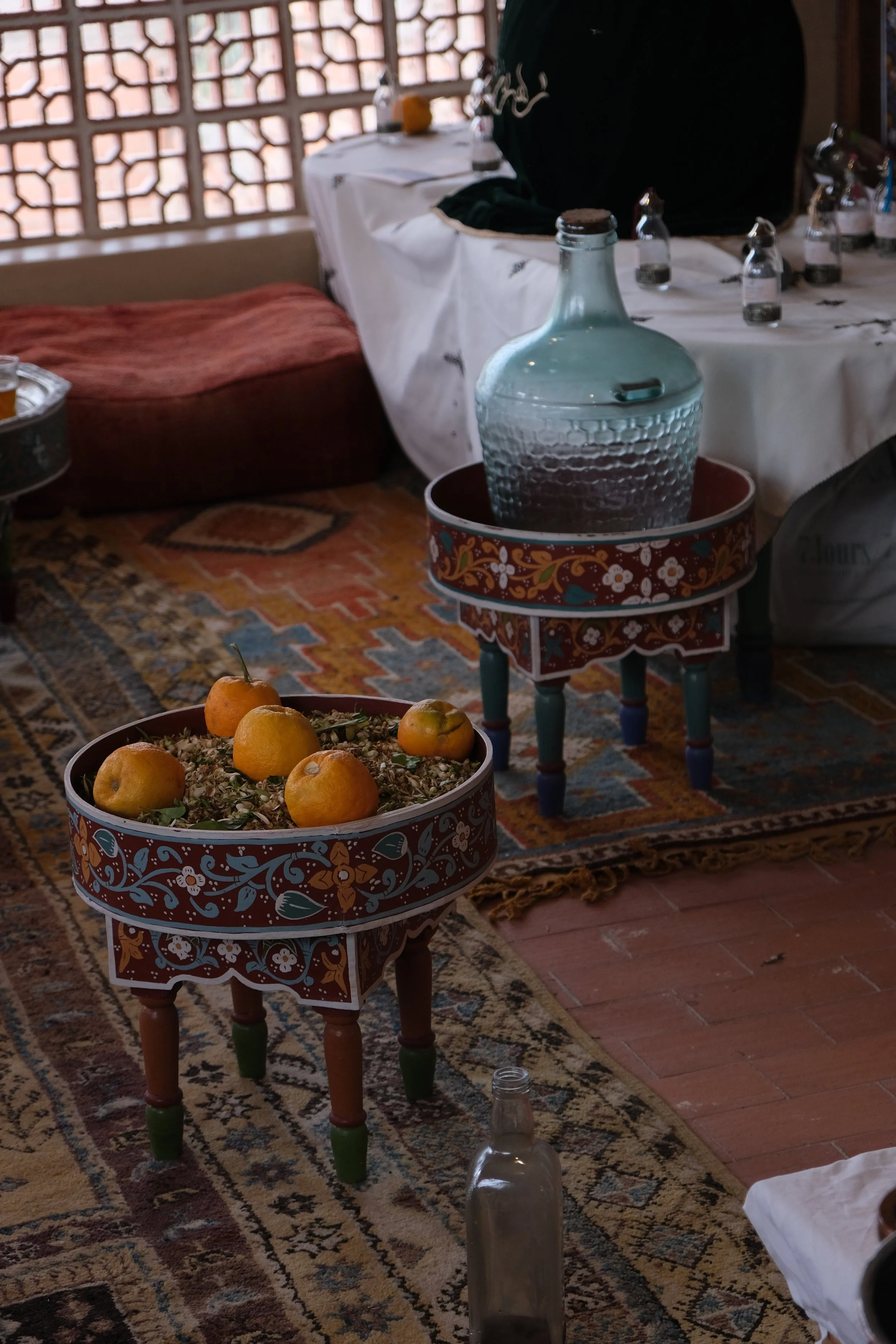
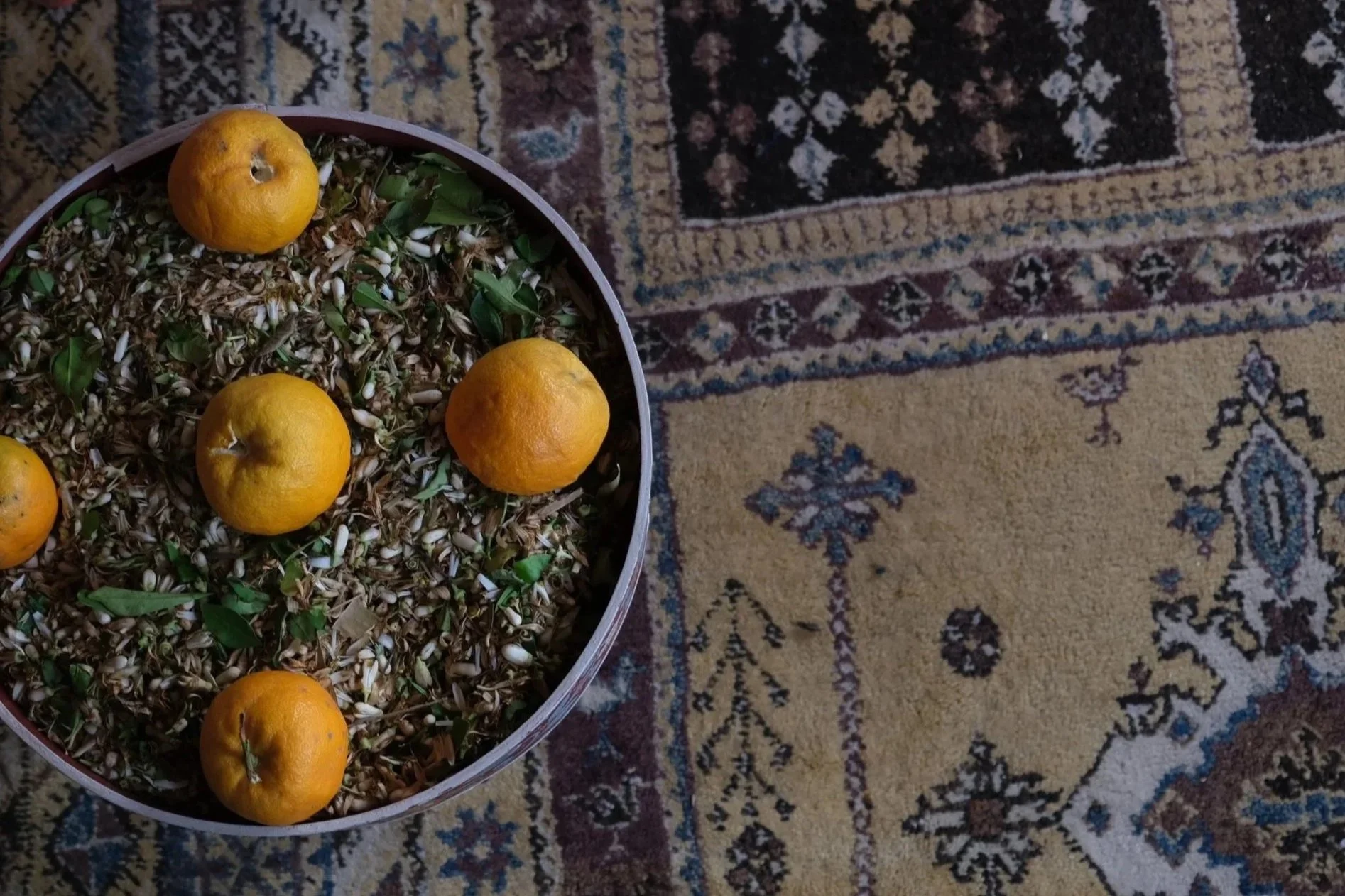
Every spring, Morocco's trees are filled with oranges too bitter to eat yet capable of releasing long lasting scents defying the changing climate. Within this tradition, every element finds its reason: the tree provides the cooling shade, the fruit offers its energy as fuel, the blossom becomes scent, and the fallen petals return to the soil as compost - a cycle where the end is always a new beginning.
While orange blossom is a coveted treasure in the culinary and cosmetics industry, it is a heritage passed down across generations, capturing the essence of climate resilience and reimagining what biodiversity preservation looks like.
The Ancestral Science
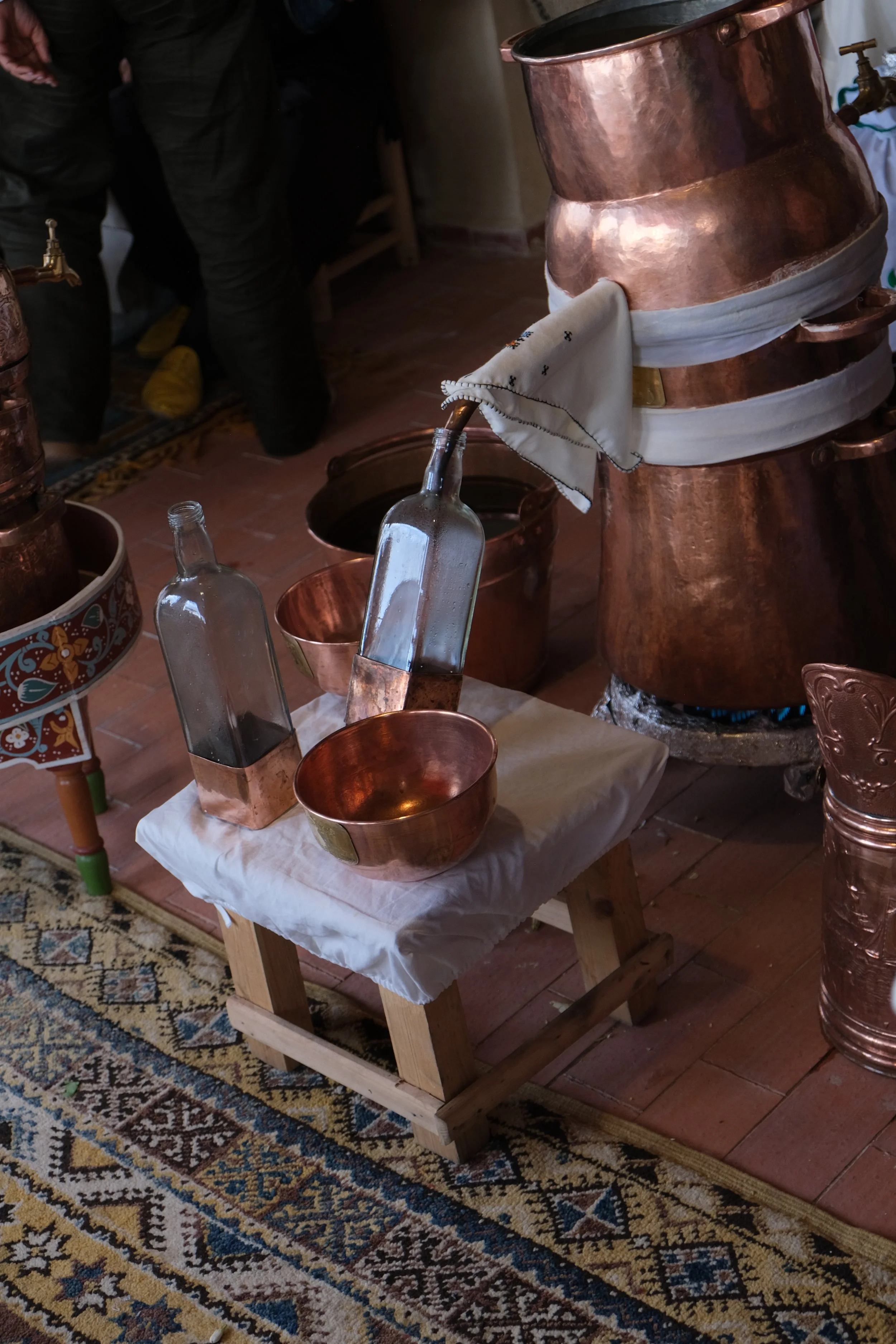
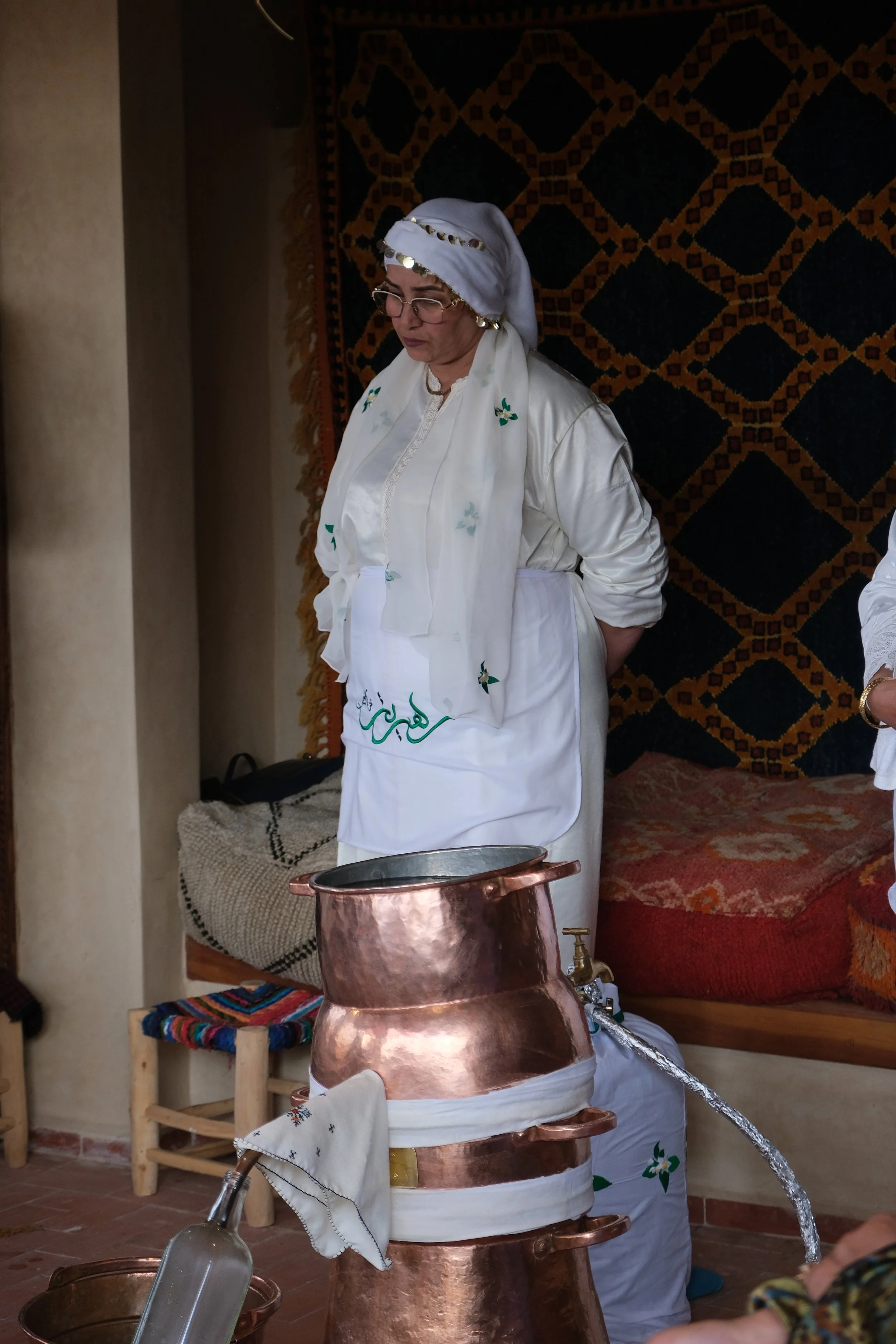
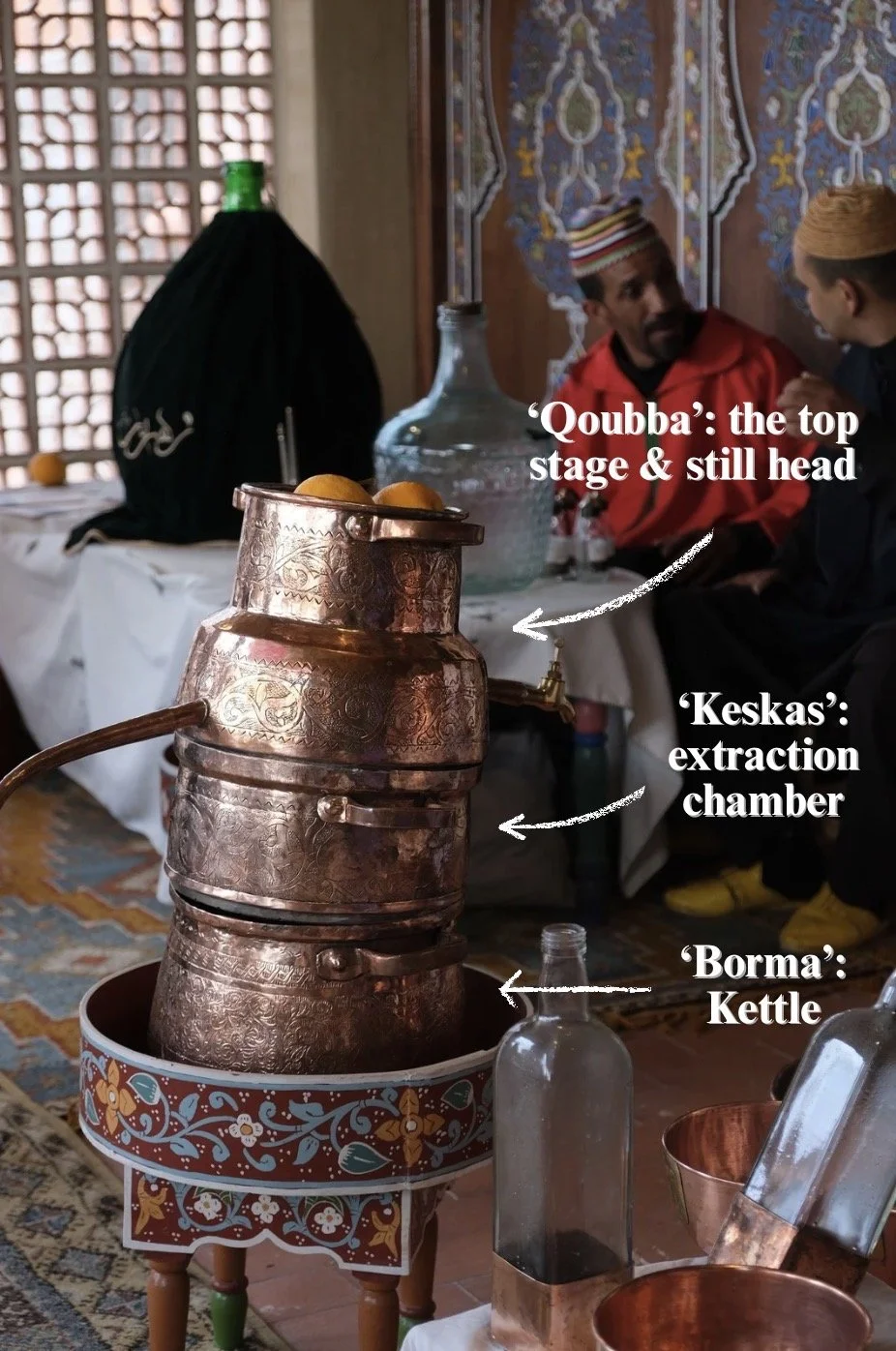
The distillation as we know it today, has deep roots in the Arab world where alchemy and identity walked hand in hand. The flowers are distilled using a traditional copper still called the ‘Qattara’ composed of interconnected parts where steam passes through the blossoms.
Scientifically, this is a form of steam distillation: heat releases volatile aromatic molecules, which are then cooled and collected in liquid form.
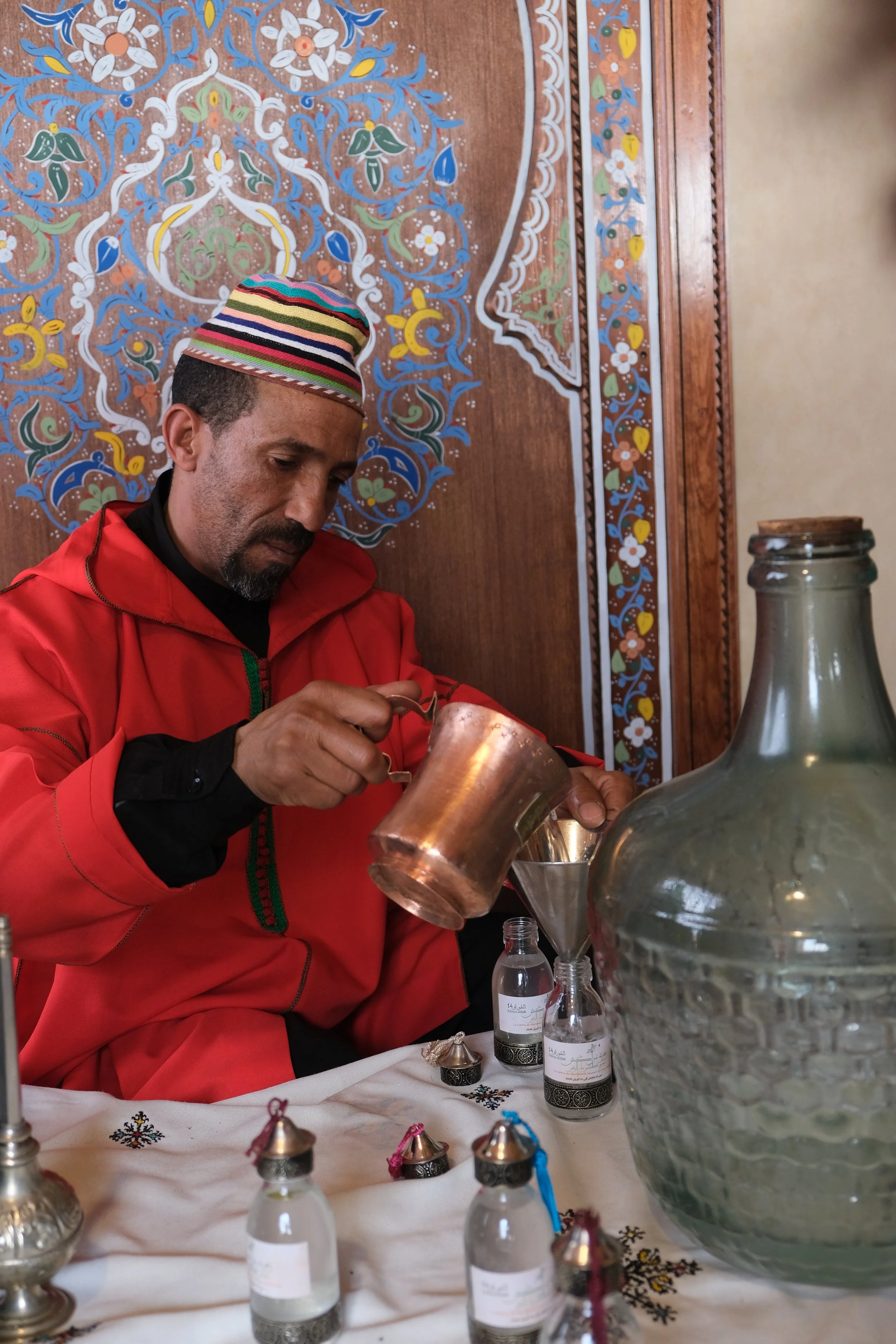
Step1: Filling the Qattara with a precise ratio of blossoms and pure water: the ‘Borma’ —with boiling water, the ‘Keskas’ with the blossoms, the ‘Qoubba’ with cool water.Step 2: The joints between the three sections must be airtight. In ancestral practice, this was sealed using a paste made of a thin piece of cloth and flower.Step 3: Monitoring the heat source and changing the cooling water at the top stage to ensure optimal temperatures for distillation.Step 4: We watch the invisible become visible. Water turns to vapor, traveling through the Keskas and entering the Qoubba. The vapor is shocked back into liquid form and collected in bottles.
The scent of resilience
They say the future is a map waiting to be drawn. But look closer.The answer is already written:In the hands.In the fire.
In the steam.
It is written in the sharp, sweet orange blossom—a story told in scent.Every ritual, a blueprint.Every elder, an archive.What if the answers were never lost?Just stories to be told.To adapt is to remember.